1 June 2026 · Telegram Ban Service · 9 min read
Telegram account takedown: how to get a rule-breaking channel removed
A Telegram account takedown is the process of getting a rule-breaking public channel — and sometimes the account running it — labelled, restricted or removed by Telegram. You report the channel through Telegram's official routes with clear evidence; human moderators decide, and only a genuine Terms of Service breach leads to action.
What is a Telegram account takedown?
A Telegram account takedown means getting Telegram to act against a rule-breaking account — and on Telegram that usually points at the public channel, group or bot it runs. You flag the offending surface through an official route, a moderator reviews it, and Telegram restricts, labels or removes it when it genuinely breaches the Terms of Service or Community Guidelines. The word "account" is where people get tangled. If you own a group, removing a member is a two-tap admin job that Telegram never reviews. Pushing Telegram itself to remove someone else's channel is the harder path this page covers: a reported, evidence-backed case rather than a button you press. So knowing how to take down a Telegram channel really means knowing which route fits the violation, and what proof a reviewer needs before anything moves.
Restricted, labelled or removed: what taking a channel down actually does
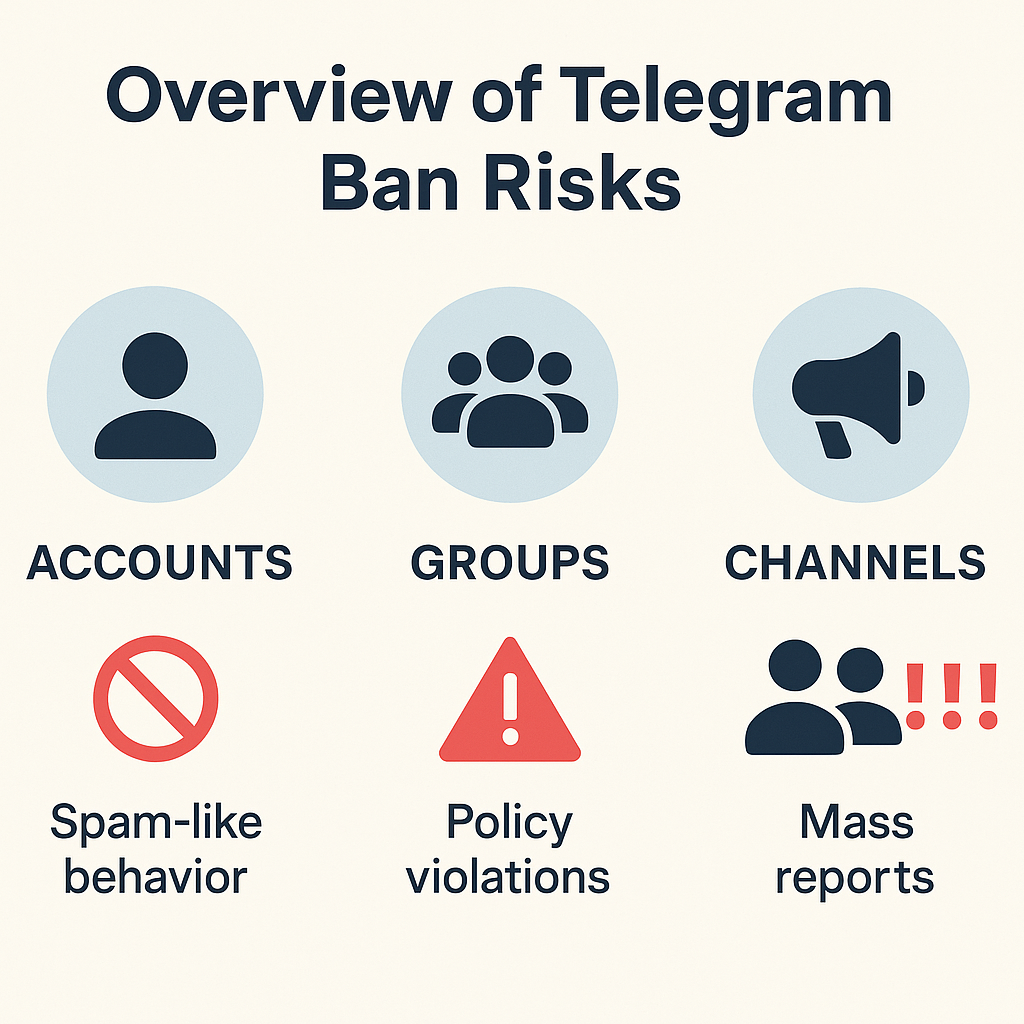
"Taken down" isn't one outcome — it's a ladder, and picking the rung you're aiming at keeps your expectations honest. A report can end in a warning label, a quiet restriction, full removal of the channel, or action against the operator account behind it. Telegram is explicit about the lightest rung: on its EU transparency page it says accounts and communities that "attempt to defraud other users may be marked with a FAKE or SCAM label" shown on the public profile. Heavier rungs strip reach or visibility, and the heaviest deletes the channel outright. Here is the spectrum in plain terms:
| Outcome | What it looks like | Typical trigger |
|---|---|---|
| SCAM / FAKE label | A red warning on the channel's public profile; it stays up but flagged | Impersonation or deception a moderator confirms |
| Restricted / filtered | Hidden behind a sensitive-content filter or limited on some apps | Borderline content that isn't an outright removal |
| Channel removed | The public channel is gone; its t.me/ link dies | A clear Terms of Service or Community Guidelines breach |
| Operator account actioned | The account running it is limited or banned, not just the channel | Repeat or serious abuse tied to the same operator |
How to report a Telegram channel through Telegram's official routes
You report a Telegram channel by matching the violation to the route Telegram built for it, then handing a reviewer something concrete. You don't even have to be a member: open a public channel from its t.me/ link and the same Report control is right there. Work down this list by what the channel is doing:
- You can open the channel. Use the in-app Report control on its profile and pick the reason that matches — scam, impersonation, violence or illegal goods — so the complaint arrives with a category a moderator can sort.
- One post is the real problem. Long-press it on mobile, or right-click on desktop, and report that single message; it drops a reviewer straight onto the evidence instead of a whole archive.
- It's impersonating you or a brand. Take it to @NoToScam, the bot Telegram runs for impersonation, and show the genuine account beside the fake.
- It's an illegal public channel. Email abuse@telegram.org, quoting the @handle and t.me/ address and attaching time-stamped screenshots of the posts that cross the line.
- It's reposting your copyrighted work. That's a separate legal route — a DMCA notice to Telegram, not a conduct report.
One rule decides most cases before you start: Telegram only fields complaints about public surfaces — channels, groups, bots and sticker sets. Private chats between participants sit outside what it will review, so there's no route to report one.
What happens when you report a Telegram channel?
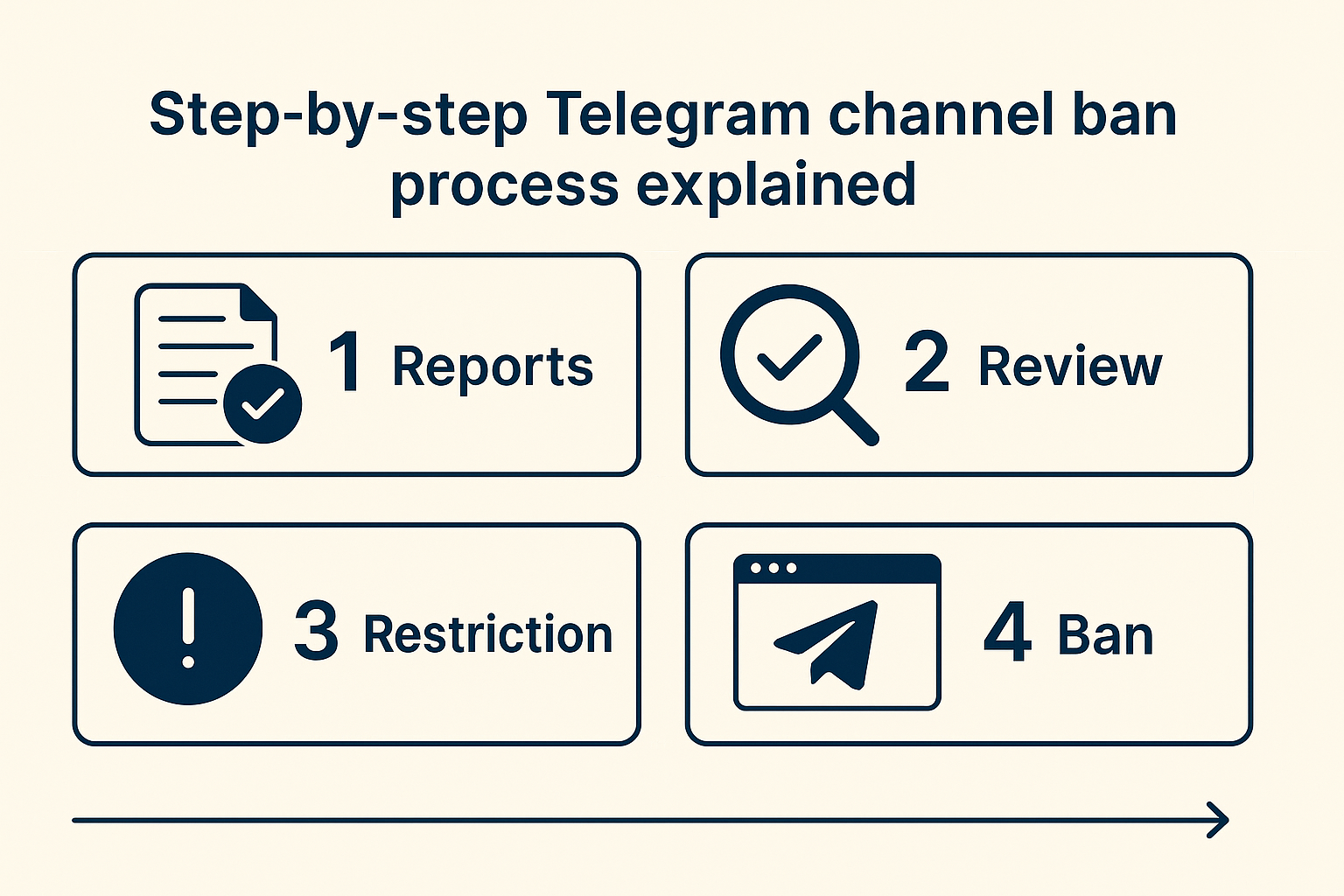
Your report joins a review queue, not an automatic kill switch. A moderator reads it, weighs the content against the rules, and acts only if a real breach is there — which is why the clarity of your evidence does more than the number of complaints. Telegram leans on people, not just code, for these calls: its public moderation page logged more than 16.5 million groups and channels blocked in 2026 alone (Telegram, accessed June 2026), each removal gated by that human sign-off. From the reporter's side, the process runs roughly like this:
- Triage. The complaint lands with Telegram's moderation team and is sorted by type and severity.
- Human review. A moderator checks whether the channel actually breaks a stated rule, using the links and screenshots you supplied.
- Outcome. The channel is labelled, restricted, removed — or left alone if no rule was broken.
- No verdict for you. Telegram sends reporters no result email; you'll usually just notice the channel flagged, gone or unchanged.
What does a Telegram channel takedown service actually do?
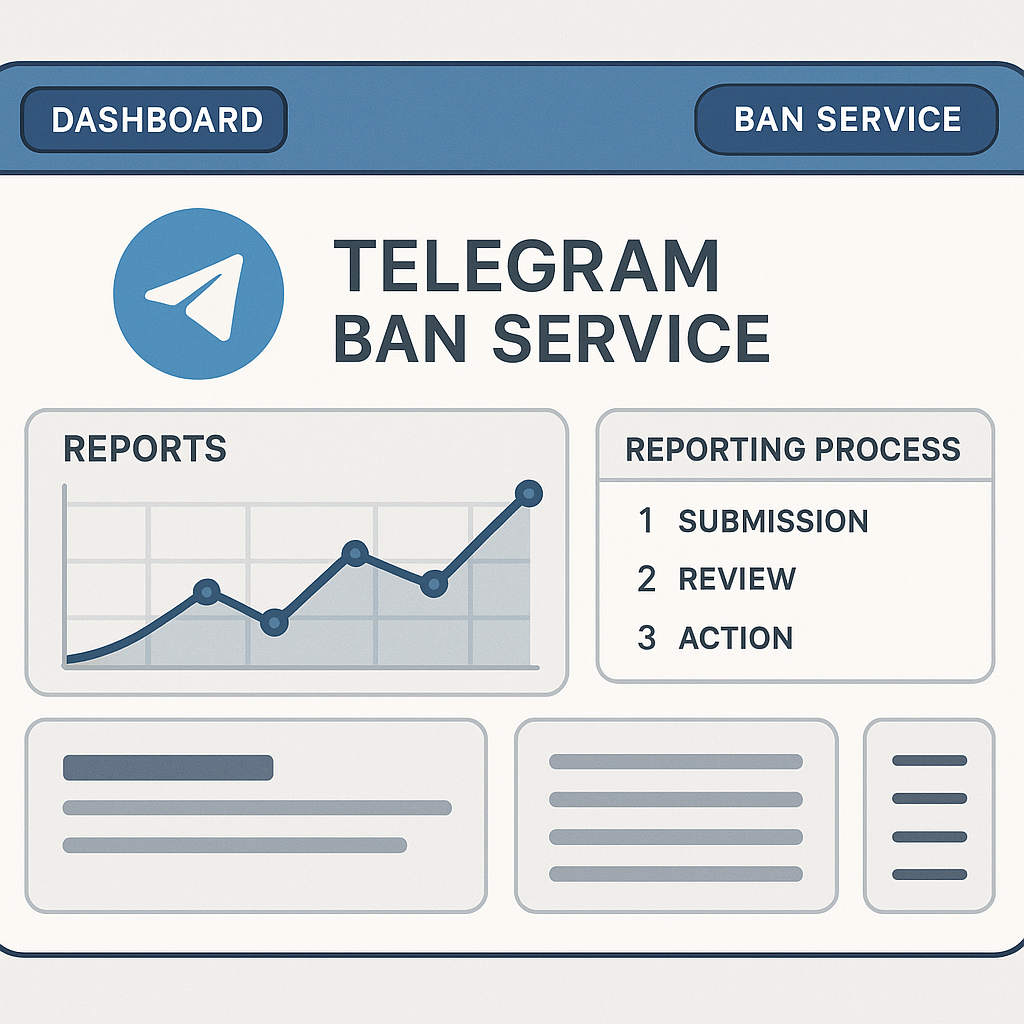
A Telegram channel takedown service does the casework most people get wrong on their own: it screens whether a real violation exists, assembles a tidy evidence pack, routes it to the right Telegram channel, and re-files when clones return. A Telegram takedown service — sometimes marketed as a channel report service — should make a genuine case land cleanly, not promise an outcome. That promise is the tell of a scam. A mass-report bot or panel that "guarantees" a ban or asks for your phone number and login code is selling something Telegram never sells, and often the theft of your own account. What an honest desk offers instead is preparation and persistence: the same screening that our reporting desk applies before a single report goes out. If a channel keeps slipping through, hand us the channel and we'll tell you whether it's actionable first.
Can a banned Telegram channel come back as a clone or mirror?
Yes, and it's the part newcomers underestimate. A determined operator seeds backup or "mirror" channels before a ban ever lands, then funnels subscribers to a fresh username the moment the original drops. Telegram acts on the specific channel you reported, so a clone is a new target, not a continuation of the old case. That's why a takedown is frequently a campaign rather than a single email: you watch for the re-spawn, capture the new @handle and t.me/ link, and report again on its own evidence. Keep a short log of every mirror you find — the username, the link, the date — because a clean record turns each re-file into a one-pass job for a reviewer. The work isn't glamorous, but for scam and piracy networks it's the only thing that keeps the lights off for good.
Is reporting a Telegram channel anonymous, and can it backfire?
Reporting is anonymous to the target, but it isn't a free-for-all. Telegram doesn't show the channel or its owner who filed a complaint, and there's no public ledger of reporters. The backfire risk sits elsewhere. A coordinated burst of identical complaints against a channel that breaks no rule wastes everyone's time and tends to rebound on the accounts behind it, and knowingly filing false reports against a lawful channel can expose you to harassment or defamation claims. There's a privacy edge worth knowing, too: a policy revision dated 23 September 2024 spelled out that, faced with a valid judicial order naming an account in a criminal case, Telegram may pass the operator's phone number and IP address to the authorities and log the disclosure at t.me/transparency. The takeaway is simple — report genuine violations, honestly, and the system works for you rather than against you.
When is a takedown the wrong route — and what should you use instead?
Reaching for a channel takedown when the problem is something else is a common reason a complaint stalls. Match the wrong to its route and Telegram can act; mislabel it and a reviewer sets it aside. The quick map:
| Your real problem | The route that fits |
|---|---|
| A channel reposting work you own the copyright in | A copyright notice — see Telegram DMCA takedown |
| One specific person or account you want acted on | The conduct route in getting someone banned on Telegram |
| A scam, impersonation or illegal-goods channel | In-app Report plus abuse@telegram.org, the focus of this page |
| A channel you simply dislike or disagree with | No valid route — disagreement isn't a violation |
If you're unsure which bucket a case falls in, that judgement call is exactly what our Telegram reporting solutions exist to make. Bring the links and we'll point you at the route that can actually move — or tell you plainly when none can.
Sources we checked
- Telegram FAQ — takedown requests cover public content only, not private chats; @NoToScam; abuse@telegram.org
- Telegram Spam FAQ — reports checked by human moderators; @SpamBot for account limits
- Telegram EU/DSA transparency — FAKE and SCAM labels on deceptive profiles
- Telegram Moderation — groups and channels blocked, 2026 figures
- Telegram Privacy Policy (23 Sept 2024) — IP and phone disclosure on a valid legal order; t.me/transparency log
FAQ
How do you get someone's Telegram channel deleted?
You can't delete someone else's channel yourself — only its owner or Telegram can. What you can do is report it through an official route with evidence of a real rule-break, and Telegram removes it if a moderator agrees. There's no fee and no admin access required; the case stands on the violation, not on who is asking.
How long does it take to get a Telegram channel taken down?
Telegram publishes no deadline, so honest answers are ranges, not promises. A blatant scam or phishing channel backed by clean evidence can drop within days; a borderline case may sit for weeks or never move. Ignore any service quoting a guaranteed 24 to 72 hour figure — that number appears in no Telegram policy.
How to take down a Telegram channel that keeps reappearing?
Report each new clone on its own links as it surfaces — Telegram acts on the specific channel you cite, not on a name. Keep the @handles and t.me/ addresses of every mirror and re-file as they pop up. Persistent operators rebuild under fresh usernames, so a takedown is often a monitoring routine rather than one report.
Do Telegram channel owners know who reported them?
No. Telegram doesn't reveal the reporter's identity to the channel or its owner, and there's no public list of who filed what. Bear in mind, though, that on a valid court order tied to criminal activity Telegram can disclose an operator's phone number and IP address to the authorities — a reason to report only genuine violations.
Is a paid Telegram takedown service worth it, and what is a channel report service?
A Telegram takedown service — sometimes sold as a channel report service — assembles the evidence and files genuine violations through Telegram's official routes for you. It earns its fee when a case is complex or keeps re-spawning. Avoid any that guarantee a ban or ask for your login: removal is a moderator's call, never something a vendor controls.
How many reports does it take to delete a Telegram channel?
There's no magic number. A channel comes down when a moderator confirms it breaks the rules, so one precise, well-evidenced report does more than hundreds of identical ones. Treat any claim that a set count forces an instant ban as folklore — Telegram reviews the content, not the size of the pile.