8 June 2026 · Telegram Ban Service · 10 min read
How to report Telegram extortion or a counterfeit seller through official channels
To report Telegram extortion, report the account or channel in-app under a Scam or illegal-content reason, email abuse@telegram.org, and take the threat to the police — never pay. To report a counterfeit seller, flag the storefront channel the same way and send its t.me link with photos of the listings. Telegram only acts on public content.
Is reporting extortion different from reporting a counterfeit seller?
Yes, and the difference decides your first move. Extortion is a crime aimed at you — someone demanding money or images under threat — so speed and the police matter as much as the Telegram report. A counterfeit seller is a commercial-policy breach: a storefront channel hawking fakes that you document and report, with no personal danger and no clock ticking. Both break Telegram's Terms of Service, and both start with the in-app Report button, but the evidence you gather and where you escalate afterwards pull apart. The table below sets the two side by side; the rest of this guide then takes each route — and the specific scam types underneath them — in turn.
| Extortion | Counterfeit seller | |
|---|---|---|
| What it is | A threat to harm, expose or leak unless you pay | A channel or bot selling fakes, replicas or stolen goods |
| Telegram rule broken | Blackmail, threats, illegal activity | Sale of counterfeit or otherwise illegal goods |
| First move | Stop replying, save proof, report, call the police | Screenshot the listings, then report the channel |
| Key evidence | Threat messages, the @username, the payment demand | Product photos, prices, payment handle, the t.me link |
| Escalate beyond Telegram | IC3 / FTC / UK Report Fraud; StopNCII for images | Your brand's legal team; a DMCA notice if it copies your work |
How do you report extortion or a 'pay-or-we-leak' threat on Telegram?
Report the account in-app, back it with an email to abuse@telegram.org, and treat the threat as the crime it is. Whether it's sextortion, a hacked-account ransom or a blunt "pay or we leak your data" demand, the playbook holds: don't pay, don't keep talking, and don't delete anything you'll need as proof.
- Capture evidence first — the @username, the threatening messages and any wallet or payment address, saved as dated screenshots.
- Report the account or channel in-app: open the profile, choose Report, and pick the Scam or illegal-content reason that fits.
- Email abuse@telegram.org with the same links and screenshots, so a human moderator can review the public account behind the threat.
- Report the crime to the authorities — in the US the FBI's IC3 or ReportFraud.ftc.gov; in the UK the Report Fraud service that replaced Action Fraud in December 2025.
- Block the account once your proof is safely stored.
Paying almost never ends extortion; it signals that you'll pay again. If the threat involves intimate or faked images, the deepfake and leaked-content routes further down do more than a plain report, and our guide to reporting Telegram abuse walks the in-app flow tap by tap.
How do you report a Telegram counterfeit seller or fake shop?
Report the storefront channel or bot in-app under a Scam reason, then email abuse@telegram.org with its t.me link and screenshots of the listings — prices, product shots and the payment handle the seller hands out. A counterfeit seller or fake shop on Telegram usually runs as a public channel or a "shop" bot, which is precisely the kind of public surface Telegram will review.
Telegram's rules bar trading counterfeit and illegal goods outright, so a report that names the rule and shows the merchandise gives a moderator everything they need to act. Two extra routes help when the shop touches your own business. If it lifts your photos, catalogue or other original work, a formal DMCA notice to dmca@telegram.org from you as the rights holder is the copyright route — our Telegram DMCA takedown guide lists the six things a valid notice must contain. If it clones your brand name or logo to look official, that shades into impersonation; a Telegram account takedown tackles the look-alike, while trademark abuse has no dedicated Telegram inbox, so spell it out plainly inside your abuse@ email instead.
Which report reason fits your Telegram scam type?
Pick the in-app reason that matches the scam, because a precise reason plus proof reaches the right moderator faster than a vague "this is bad" flag. Most of the cons people want gone share the same two-step spine — report in-app, then email abuse@telegram.org with evidence — but the reason you choose and the outside body you involve shift with the scam. Here's the quick map.
| Scam type | How it operates | How to report it |
|---|---|---|
| Investment group scam | A "signals" or crypto group promising guaranteed returns, often pig-butchering | Scam reason; add IC3 with the wallet address and transaction hash |
| Tech support scam | A fake "engineer" or channel claiming your device or account is compromised | Scam reason; never grant remote access or read out codes |
| Gift card scam | A seller or "agent" insisting on payment in gift-card codes | Scam reason; also tell the card issuer, since codes are rarely recoverable |
| Fake customer service | An account posing as a brand's real support to phish your login | Scam or impersonation; message @NoToScam with both profile links |
| Channel impersonating a company | A clone using a firm's name, logo and posts to look official | @NoToScam plus brand evidence; pair it with an account takedown |
| Bot farm | A cluster of automated bots blasting spam or scam links at scale | Report the bots and email abuse@; note @BotSupport is developer help, not an abuse line |
For the wider picture of which scam is handled where, our Telegram fraud report guide maps the full set, and if a panel promises to bulk-flag a target into oblivion, read the mass report bot reality first — volume is the one thing Telegram's systems ignore.
How do you report a deepfake or a channel sharing leaked content?
Report the channel and the exact posts in-app, email abuse@telegram.org, and lean on the specialist removal services built for this — they keep working even after the content has spread past one channel. A deepfake Telegram channel, or one sharing leaked private images, is among the most harmful things you can stumble on, and the law has moved quickly to back removal.
For adults, StopNCII.org builds a digital fingerprint (a hash) of the image on your own device and shares only that hash with partner platforms to detect and block matches — the picture itself never leaves your phone. For anyone under 18, NCMEC's free Take It Down service does the equivalent. Both sit alongside the Telegram report, not instead of it. Fresh statute adds weight: the US TAKE IT DOWN Act, signed in 2025, makes non-consensual intimate images including deepfakes a federal matter and sets a 48-hour platform removal window, while the UK's Online Safety Act turned sharing or threatening to share them into a priority offence. If what leaked is your own copyrighted work rather than your likeness, the DMCA route applies in place of the abuse report.
How do you permanently ban a counterfeit or extortion channel on Telegram?
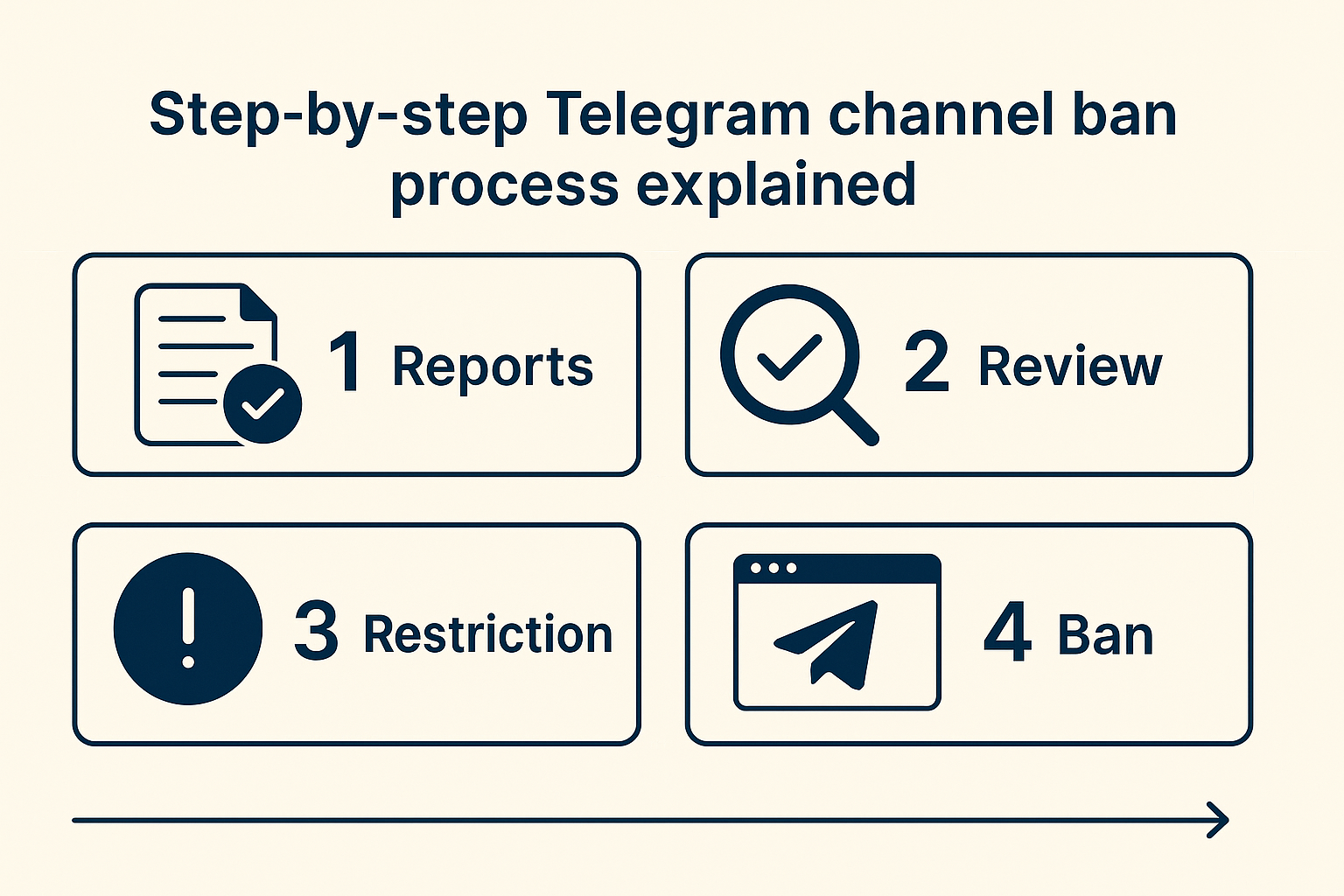
A confirmed rule-break backed by clear evidence is what does it — not a pile of reports. Telegram reviews flags by hand and acts on the violation, so the best way to get a Telegram channel banned is a precise, well-documented report rather than volume. There's no button that permanently bans a channel on demand, and no published timeframe for when a removal lands.
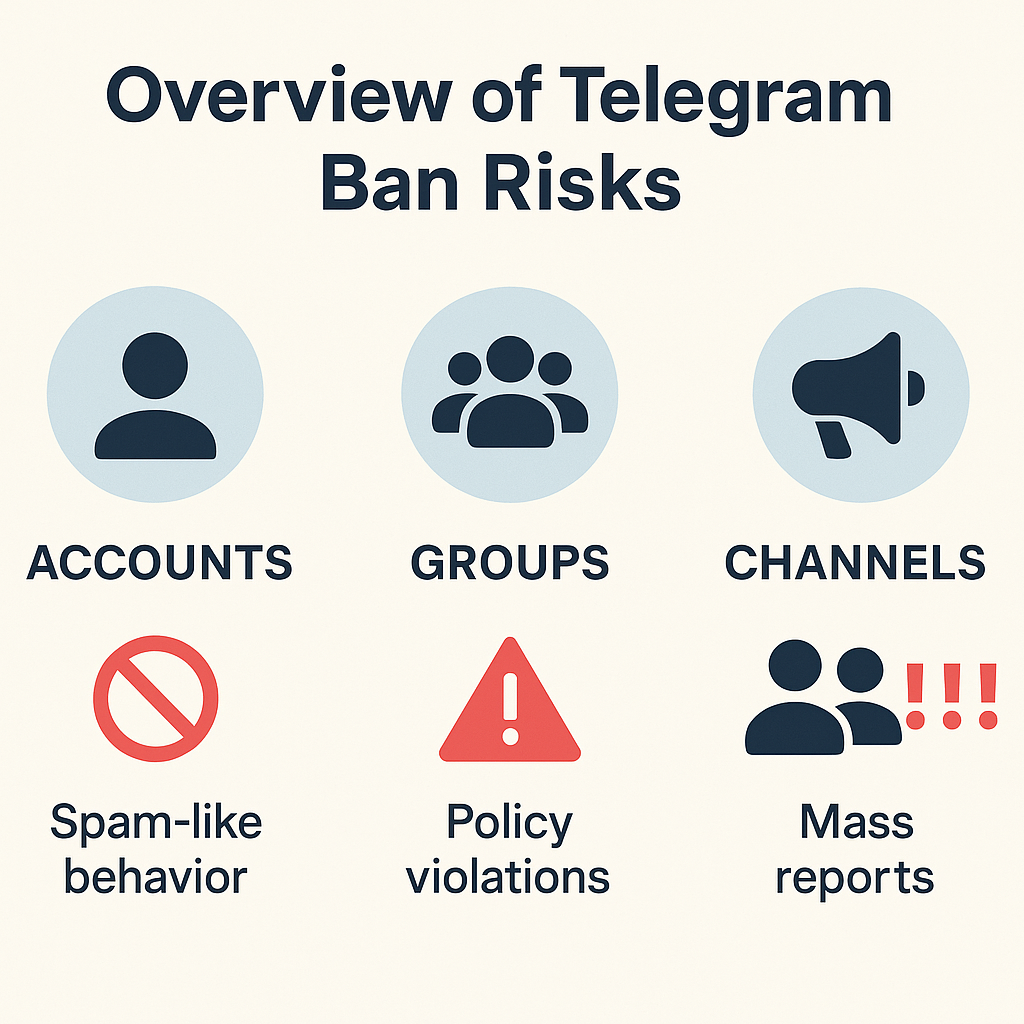
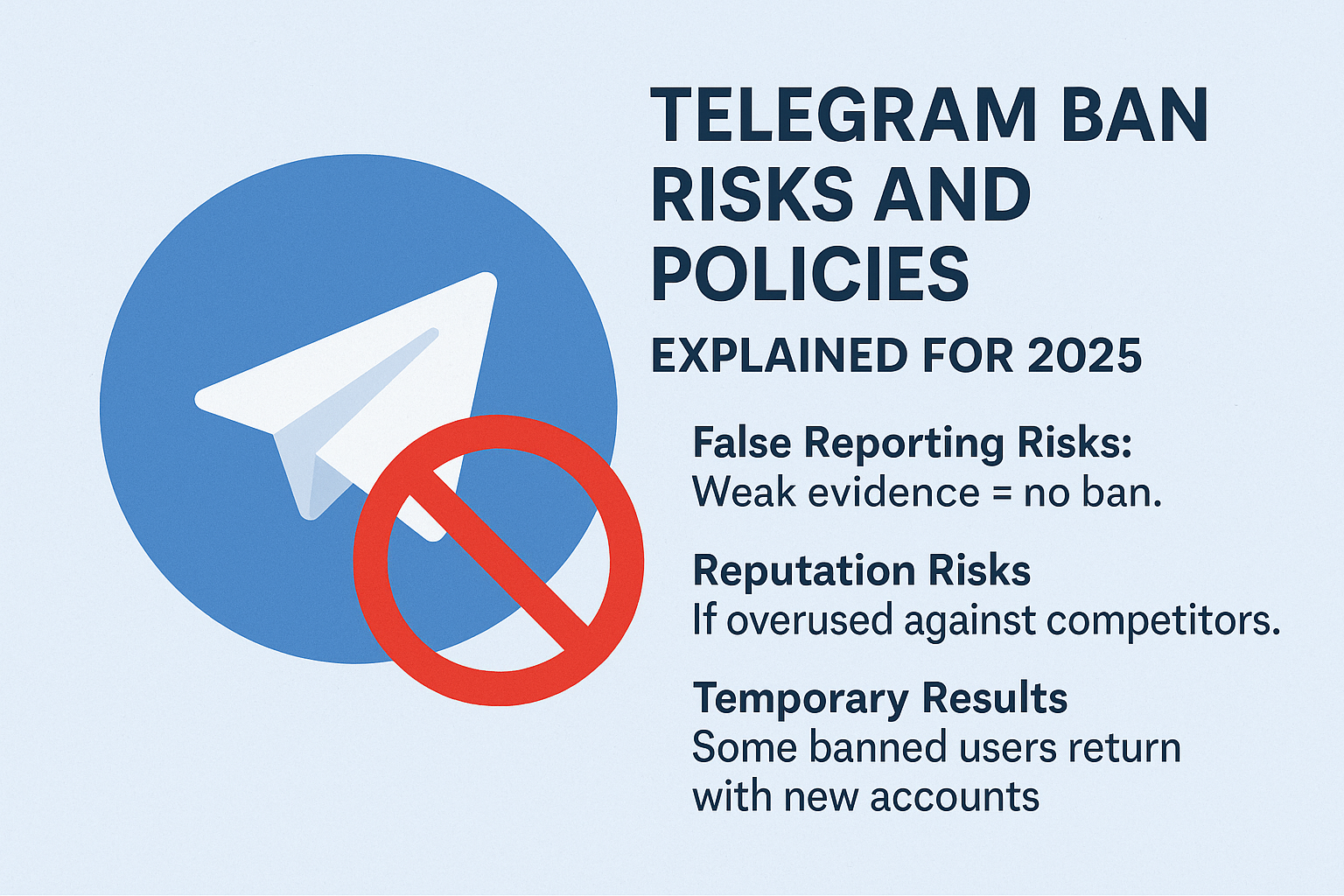
Telegram's moderators took down more than 15.4 million groups and channels for harmful content during 2024, according to its moderation report — evidence the system removes channels at scale when a breach is genuine. What it won't do is pull a channel because a crowd flagged it; coordinated mass reports are detected and discounted, which is exactly why a mass report bot can't manufacture a ban. To make removal stick, name the precise rule, attach the t.me links and dated screenshots, and re-file with fresh proof if the channel re-spawns under a new @username. For a channel you own and simply want gone, you can delete it yourself; for one you don't, our guide on what gets someone banned covers the evidence moderators genuinely act on.
Whatever landed in your chats, the job breaks into three moves — save proof, send it to Telegram by the route that fits the case, and hand any crime to the people with real power to act. Our rundown of every report route shows which surface to flag for a group, channel, user or bot, and the wider set of Telegram reporting solutions sits a click away. Would rather not pick through it alone? Bring us the case and our reporting desk will build the evidence and lodge a genuine violation through Telegram's official channels alongside you — real breaches only, and never a channel that follows the rules.
Sources
- Telegram FAQ — Report buttons, @NoToScam, abuse@telegram.org and dmca@telegram.org; public content only
- Telegram Terms of Service — ban on trading illegal and counterfeit goods
- Telegram Moderation — 15.4M+ groups and channels removed for harmful content in 2024
- FBI Internet Crime Complaint Center (IC3) — report extortion and investment fraud
- FTC ReportFraud — report scams and fraud in the US
- Report Fraud (UK) — the national fraud reporting service that replaced Action Fraud
- StopNCII.org — hash-based removal of non-consensual intimate images for adults
- NCMEC Take It Down — free removal help for under-18s
FAQ
How to report a Telegram channel without an account?
Not through the app — the in-app Report button needs Telegram installed and signed in. Logged out, a public channel's t.me/s/ web page only lets you read it, with no Report control. The one no-account route is emailing abuse@telegram.org with the t.me link, the @username and dated screenshots.
How to contact Telegram Trust and Safety?
Telegram publishes no public Trust and Safety phone line or personal inbox. The real contacts are the in-app Report button, abuse@telegram.org for illegal or abusive content, dmca@telegram.org for copyright, and the @NoToScam bot for impersonation and scam accounts. Anyone selling a private Trust and Safety contact for a fee is best avoided.
How to escalate a Telegram report that's being ignored?
Telegram runs no formal appeal tier, so escalation means re-reporting with stronger proof: email abuse@telegram.org with the @username, t.me links and dated screenshots that name the exact rule broken. If money or a threat is involved, escalate outside Telegram to the police and your national fraud body, whose enquiries carry more weight than a repeat flag.
Can you report a Telegram channel on behalf of someone else?
Yes. You can report any public channel, group or bot you can see, so flagging one that targets a friend, a relative or your employer is fine. The exception is a copyright claim, which Telegram only accepts from the rights holder or their agent. For a threat against another person, encourage them to file with the police themselves too.
How to report a Telegram video?
Open the video, press and hold it (or right-click on desktop), choose Report, and pick the reason that fits — Scam, illegal content or copyright. For a video that breaks the law or leaks private content, also email abuse@telegram.org with the message link so a moderator reviews the exact post, not just the channel.
Will the channel know I reported it, and how long does Telegram take?
Reports are confidential — the channel or account is not told who flagged it. Telegram publishes no fixed timeframe, so a removal can take hours or much longer depending on the case and the evidence. A clear, specific report with proof is reviewed sooner than a vague or mass-filed one, which its systems discount.