8 September 2026 · Telegram Ban Service · 9 min read
Deepfake Telegram bots and channels: how to get them removed
Deepfake Telegram bots are automated accounts that generate fake nude or sexual images of real people from an ordinary photo. They break Telegram's rules, and in the US, UK and EU they now break the law. Report the bot and the channel promoting it separately, then escalate by email with the t.me links.
What is a deepfake Telegram bot, and how do these bots actually work?
It takes one photograph and returns a fabricated nude of the person in it, usually within seconds and often for free credits that run out just as the user gets attached to the result. No skill is involved. A telegram deepfake bot is a chat account like any other, except its replies are generated images, and the whole interaction happens inside a normal Telegram conversation window.
The scale was first measured in October 2024, when WIRED counted at least 50 such bots drawing more than 4 million combined monthly users, alongside roughly 25 linked channels holding over 3 million members. Telegram deleted the ones WIRED named. The category did not go away. By 29 January 2026 the Guardian was reporting at least 150 channels operating across six countries, with Telegram citing 952,000 pieces of offending material removed during 2025.
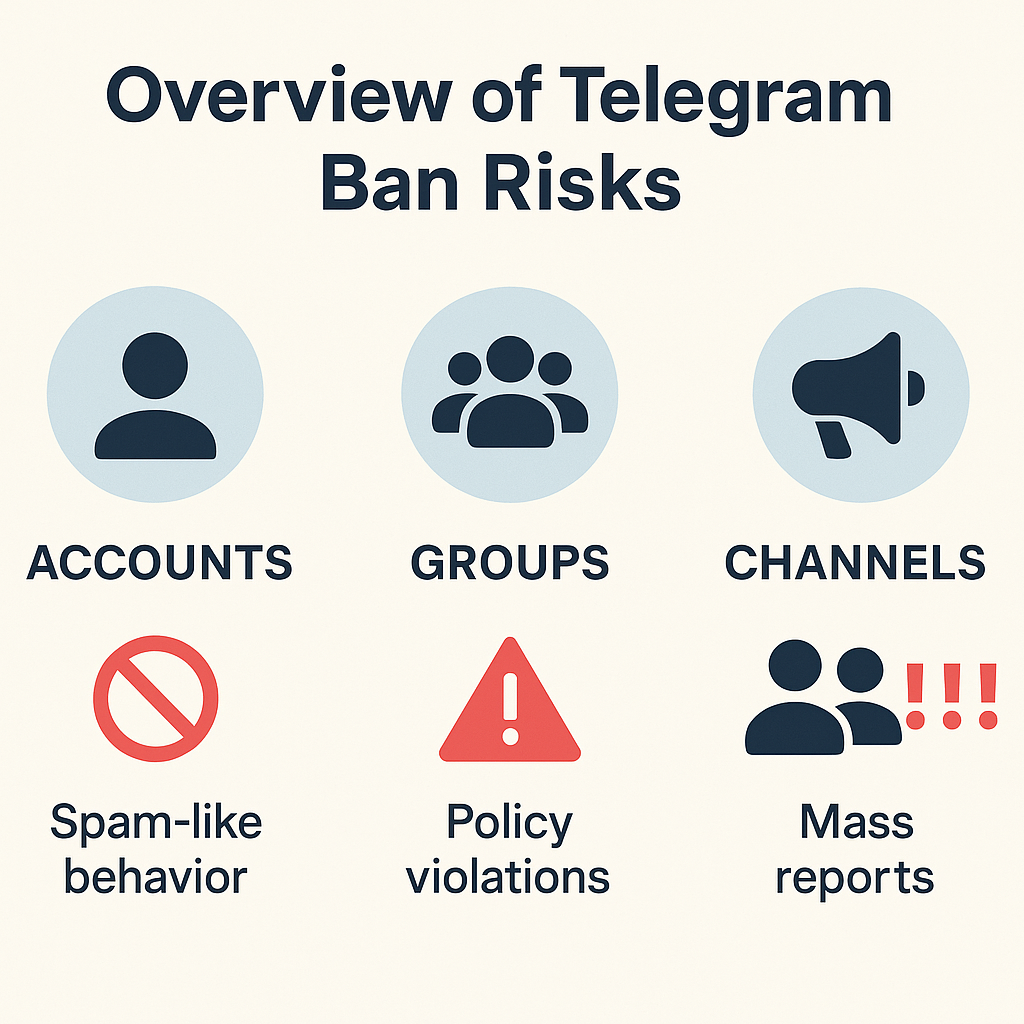
Three separate objects keep this running, and confusing them is the commonest reason a report achieves nothing. The bot generates. A channel or group advertises it, hosts the output and links replacements. A website behind both takes the payments and holds the model. Report only the bot and the other two carry on uninterrupted, which is why Telegram Ban Service treats a nudify bot case as a minimum of two filings, and why the channel is often the more valuable half of the pair.
Vocabulary is deliberately slippery here. The same tool is marketed as a telegram nudify bot, a telegram undress bot, an "AI photo editor" or a telegram ai deepfake assistant, and searches split between deepfake and the older spelling deep fake. Telegram's own rules use none of those words, which matters when you write the report: describe what the bot does, not what it calls itself.
Two neighbouring cases route elsewhere. If the fake images arrive with a demand for money, that is sextortion first and a deepfake second, so our guide to Telegram extortion and pay-or-we-leak threats takes priority. If what was taken is your own copyrighted photography rather than your likeness, the DMCA route replaces the abuse report and reaches public content only.
Is making or sharing a Telegram deepfake illegal?
Yes, in every jurisdiction that matters for a takedown, and the law moved faster here than the platforms did. That changes what you are asking Telegram for: not a favour, but compliance.
Telegram's own position is easier to cite than most people expect. Its Terms of Service prohibit posting illegal pornographic content on publicly viewable channels and bots, naming bots explicitly, and its EU guidance states plainly: "We never allow child sexual abuse materials (CSAM), bestiality, and non-consensual publication of sexual materials." Quote that line. It is the cleanest primary-source sentence Telegram has published on this.
| Where you are | What is now covered | In force since | What it gives your report |
|---|---|---|---|
| United States | Publishing non-consensual intimate images including AI "digital forgeries"; covered platforms must remove on valid notice within 48 hours | Signed 19 May 2025; platform duty enforced from 19 May 2026 | A deadline, and an FTC that enforces it with civil penalties reaching $53,088 per violation |
| United Kingdom | Sharing, or threatening to share, intimate images including ones that merely appear to show you | 31 January 2024 | A criminal offence to cite, and Ofcom illegal-content duties binding platforms since 17 March 2025 |
| United Kingdom | Creating a purported intimate image, and requesting its creation | 6 February 2026 | Whoever ran the bot on your photo offends even if they never shared the output |
| European Union | DSA notice-and-action duties; AI Act transparency rules for deepfakes | DSA from 17 February 2024; AI Act Article 50 from 2 August 2026 | A formal route via telegram.org/dsa-report and the @EURegulation contact |
The American deadline is the one worth naming in writing. Since 19 May 2026, platforms covered by the TAKE IT DOWN Act have had to act on a valid request within 48 hours and remove known identical copies with it. Reports that quote a statute and a deadline read differently from reports that ask for help.
How to report a bot on Telegram when it produces telegram deepfake nudes
Capture first, report second. This ordering is not fussiness: reporting and blocking a bot can remove your own access to the conversation, and with it the proof that the bot ever replied to you. People lose their evidence this way constantly.
What to keep before you touch Report
- The exact t.me link and @username of the bot, and of every channel or group reposting its output.
- Dated screenshots showing the username and the content together in one frame, not cropped apart.
- Direct message links for the individual posts, copied through the message context menu.
- A written note of when you first saw it and how you found it, which becomes the timeline in any police report.
Store that outside the app. A folder on a computer beats a phone gallery that syncs and prunes.
The routes Telegram documents
- Open the bot's profile, use the menu and choose Report, then pick the category closest to the harm. Android taps, iOS presses and holds, desktop right-clicks.
- Report the advertising channel or group separately, as its own object, with its own screenshots. The mechanics differ slightly between the two, and every route for a group or channel sets out which fits.
- Email abuse@telegram.org with every t.me link listed plainly, one per line, and the Terms of Service sentence quoted above.
- If anyone depicted is under 18, stop and route it to stopCA@telegram.org and to NCMEC's Take It Down instead. That is a child-protection case and moves through a different queue.
- In the EU, add the DSA route and the @EURegulation contact named on Telegram's own guidance page.
One caution about a route you will meet in advice threads. A bot called @TIDABot circulates as "the" Telegram channel for non-consensual images, and its own description expands the TAKE IT DOWN Act acronym. Telegram does not name it on its FAQ, its safety page or its EU guidance; we checked all three on 8 September 2026. Until Telegram documents it, treat the addresses above as the routes that carry weight, and treat anything else as unverified.
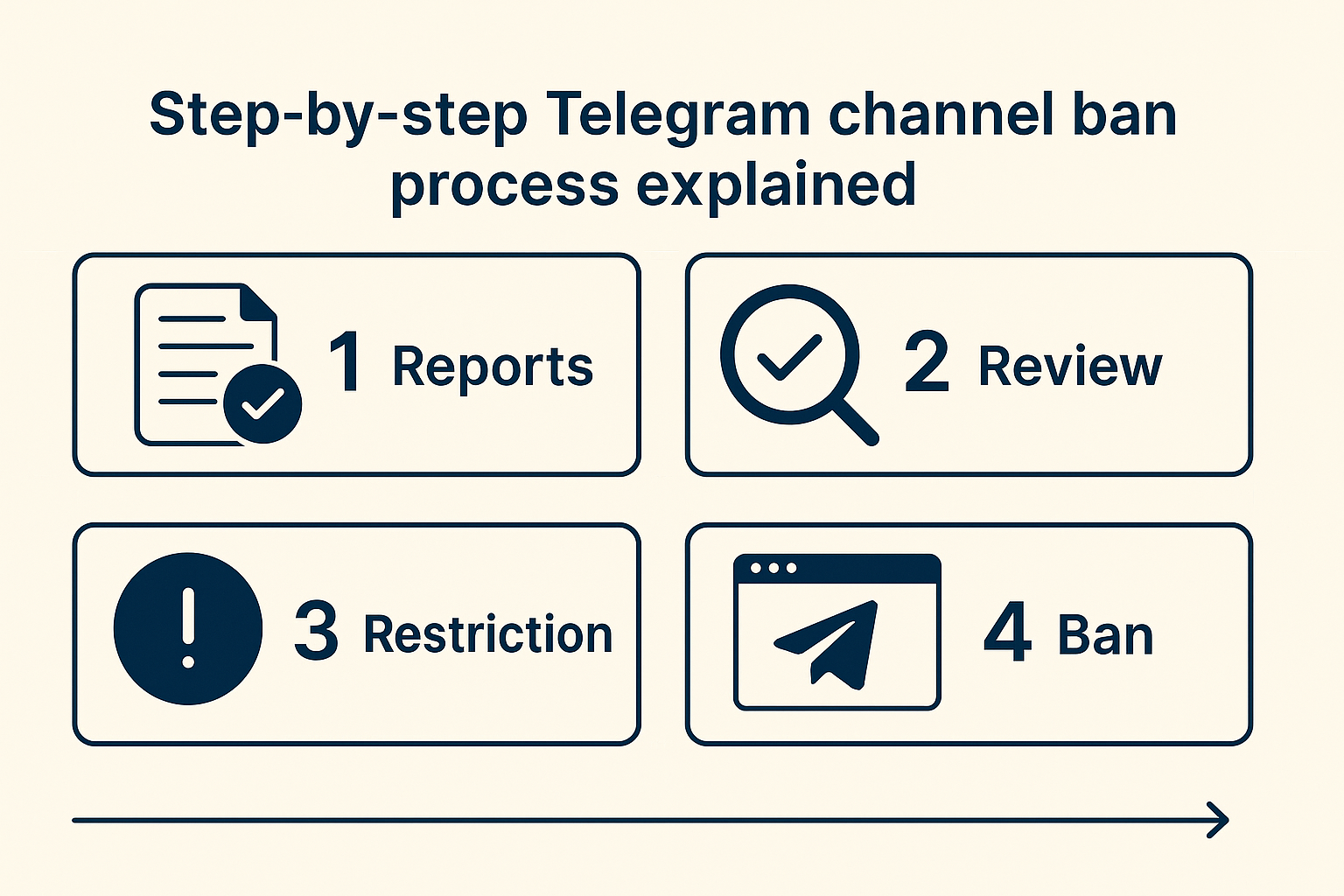
Early on at Telegram Ban Service we filed one report against the bot and stopped there. Wrong shape for the problem. The channel advertising it is a separate object with its own username and audience, and it survives the bot's removal untouched. Every case now goes in as a pair, evidence gathered separately for each half. To hand the whole thing over, that is what our Telegram report service does, and reporting abuse tap by tap covers the in-app flow in more detail than there is room for here.
Why a banned deepfake telegram channel is back the next morning
Because removal was priced in before you reported. The Centre for Information Resilience documented the architecture in August 2026: these operations run serially numbered burner bots, so a handle ending in 34 is followed by 35 and then 36, with the number itself quietly recording how many times the thing has been taken down. Backups are staged in advance. The website, the model, the payment rail and the subscriber list all survive.
That reframes the goal. A single successful report is one round in a sequence, so the right response to a replacement is to file again with the pattern attached rather than starting a fresh complaint from nothing. The removals themselves are real enough: Telegram's live counter showed 24,954,438 groups and channels blocked so far in 2026 when we loaded it on 8 September, among them 394,655 tied to child abuse material. Replacement is simply faster than removal.
Two targets outlast the bots and deserve more of your attention than they usually get. The advertising channel is one, since a telegram deepfake channel with a stable name and thousands of members is a slower, heavier object to rebuild than a bot handle. The payment layer is the other. Cases like this rarely resolve with one filing, which is the same logic behind why no report count bans a channel and why a documented route-by-route takedown beats volume. A deepfake telegram group being rebuilt weekly is still worth reporting weekly.
This is also where people reach for the wrong instrument. Buying flags from a mass report bot assumes a counter that decides bans, and no such counter exists, so the panels produce noise a moderator discounts. Where the operator's own account is the durable object rather than the channel, a Telegram account takedown is the filing that fits, and removing a channel outright works differently again depending on whether you own it.
Does StopNCII hashing reach Telegram?
Not directly, and this is the gap most guides get wrong. StopNCII generates a hash of your image on your own device, so the picture never leaves your phone, then shares only that fingerprint with partner platforms so they can block matches. Its published partner list runs to Facebook, Instagram, TikTok, Reddit, Snap, X, Bluesky, OnlyFans, Pornhub and others. Telegram is not among them.
Use it anyway. Hashing stops the spread outward to the platforms that do participate, which is where most lasting damage happens, and it costs one session.
What it cannot do is substitute for a Telegram filing, so Telegram Ban Service treats the two as parallel tracks opened the same day. Filing also exposes you far less than most people fear, a point our note on whether Telegram reports are anonymous covers properly.
One hash system does reach Telegram. It joined the Internet Watch Foundation in December 2024, gaining access to hash lists that cover child sexual abuse material including AI-generated imagery. For a minor, then, hash-matching genuinely works on Telegram, and stopCA@telegram.org is the address that engages it. For adults it is StopNCII plus a direct report, and neither guarantees a removal that only Telegram decides.
Why we don't publish a telegram deepfake bots list
Because a list is the distribution. Searches for a telegram deepfake bots list, or for a telegram deepfake bot free of charge, land on affiliate pages earning commission on signups, and each of those pages enlarges the problem it describes. Telegram Ban Service will not name a working bot, link one, or explain how to reach one, whoever is asking.
Naming them in court is different. San Francisco's City Attorney sued the operators of sixteen undressing sites in August 2024, clothoff telegram being among the brands cited in coverage of the case, after those sites drew more than 200 million visits in six months. One operator settled, shut down and paid $100,000 in civil penalties. Meta sued the company behind CrushAI in June 2025. Naming a defendant is not advertising a product.
The same refusal applies to the other direction of this search. We will not help anyone get someone banned on Telegram who has broken no rule, and a fabricated nude submitted as evidence is itself the offence. Where the bot is monetised through a con rather than subscriptions, the fraud and scam reporting routes apply alongside the abuse filing.
If you came here looking for one of these tools, note what changed: in the UK, creating a purported intimate image has been an offence since 6 February 2026, whether or not you send it anywhere.
If you came here because you found one, do three things today. Capture the links and dated screenshots before you touch anything. File against the bot and its channel separately, quoting the non-consensual publication line from Telegram's EU guidance. Then hash the image with StopNCII so the copies that escape Telegram hit a wall elsewhere. Start with the evidence, because every route above depends on it and none can be rerun once the conversation is gone. Our full set of Telegram reporting guides covers everything else, and the desk will take the filing off your hands.
FAQ
Is Telegram reporting anonymous?
Telegram sends the reported account no notification and shows it nothing about who filed. Two gaps remain: an email to abuse@telegram.org comes from your own address, and a screenshot can carry your @username unless you crop it. Telegram Ban Service files from its own channels for exactly that reason.
How long does Telegram take to remove a reported deepfake bot?
Telegram publishes no target and sends no verdict. Child-safety material moves fastest, because hash-matching finds it without waiting for a human. An ordinary report can sit for days. That is why the case matters more than the clock: a complete filing with links and dates gets read once and acted on.
Does StopNCII work for a Telegram deepfake?
Only indirectly. StopNCII hashes your image on your own device and shares that hash with partner platforms, and Telegram is not on its published partner list. Hash it anyway to block copies spreading to the sites that do participate, then file separately with Telegram for the Telegram copy.
What if the person in the images is under 18?
Treat it as a child-protection case rather than a content dispute, using NCMEC's free Take It Down service, emailing stopCA@telegram.org and contacting your local police. Telegram joined the Internet Watch Foundation in December 2024, so that hash list does reach the platform even though StopNCII's does not.
Can police act if the bot operator is in another country?
Often yes, though slowly. Report locally regardless: the offence is usually treated as happening where the victim is, and a police reference number gives later platform escalation something to cite. The payment processor and the hosting company behind the bot's website are frequently reachable when the operator is not.
Are Telegram nudify bots like ClothOff actually real?
Yes, and they have been in court. San Francisco's City Attorney sued the operators of sixteen undressing sites, ClothOff among them, in August 2024. WIRED counted at least fifty such bots on Telegram that October. This is documented litigation and reporting, not rumour.
The bot came back under a new name. Do I start over?
File again, but reuse the case rather than rebuilding it. Keep one folder holding the original evidence and add each new username to it, so every filing shows a pattern instead of a fresh complaint. Report the channel that keeps linking the replacements as well as the bots themselves.